
Transformation Period
FORMER SAMURAI IN NEW PROFESSIONS (1877-1890)
With the traditional roles of samurai being squashed and taken over by the government, former samurai were forced to reinvent themselves in new positions. Police forces in major cities offered a militaristic community that samurai had enjoyed before Meiji’s ascendancy; thus, new police forces in modern Japan became dominated by samurai. Martial skills and the ideals of public service translated well into police work. Samurai also used their literacy and high-level connections to embark on business and banking ventures. Some even founded zaibatsu, or industrial conglomerates, that became Japan’s first mega-corporations. Others used their literacy to become teachers. By 1890, samurai had completely dispersed throughout Japan and existed across a multitude of occupations.
EDUCATIONAL AND BUREAUCRATIC INTEGRATION (1877-1890)
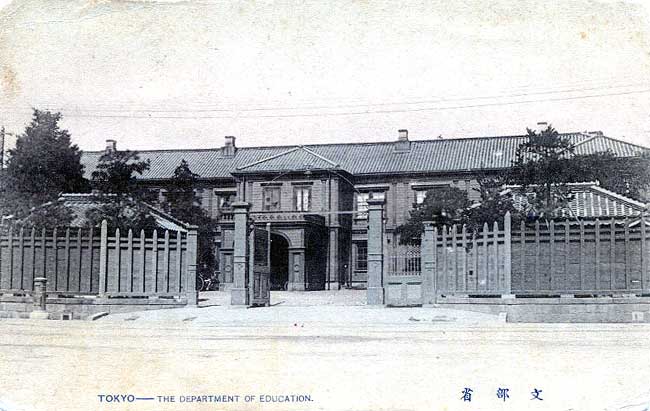
Japan’s new government embarked on a series of educational reforms to rework the country’s school systems. In 1877, Tokyo Imperial University was founded and quickly filled with the sons of former samurai who could afford secondary education. Additionally, the government established a civil service examination modeled on China’s own centuries-old examination. The exam would, in theory, make Japan meritocratic and open government positions to every class. Still, in practice, it favored wealthier samurai families who had the resources to hire tutors and study for the test. In 1886, the country established a national curriculum known as the Educational Standardization. It incorporated values embodied by former Samurai, such as loyalty, discipline, and self-sacrifice, but taught them in the context of nationalism rather than regionalism.

POLITICAL ACTIVISM AND FREEDOM MOVEMENT (1874-1890)
As Japan’s traditional structures fell apart, many people in Japan began advocating for human rights. The Freedom and People’s Rights Movement of the 1870s and 80s, led by former Samurai, advocated democratic ideals and sought to redirect political energy away from violent resistance toward constitutional agitation. Many leaders of Japan’s democratic movement were former samurai, who were typically educated in Western political philosophy and could use Western democratic structures as a framework for Japan. By the 1880s, Japan’s first political parties had been created. The Liberal Party, Jiyūtō, and the Progressive Party, Kaishintō, constituted new venues for former Samurai to exercise political influence. In response to these parties, the government created a Constitution that gave former Samurai formal political roles through the House of Peers and the elected House of Representatives. This system was deliberately modelled after Britain’s House of Lords and House of Commons.
CREATION OF MODERN JAPANESE IDENTITY (1880-1890)
The rebirthed nation faced an identity crisis as the turn of the century approached. The government sought to construct a national culture by combining traditional samurai values with modern philosophical thought. Documents such as the Imperial Rescript to Soldiers and Sailors of 1882 incorporated many of the core principles of Samurai-class ethics into the military code. Extreme Westernization characterized the Rokumeikan Era of the mid-1880s, as European dress and social events became the norm, but European modelling slowly morphed into a Japanese reformulation of European culture. The Bushidō Transformation saw Japan develop its own style of chivalry comparable to Europe and the West, but not identical.

LAYER 2: NAVAL DEVELOPMENT AND BRITISH COOPERATION (1870-1890)
Japan opened itself up to Britain through naval cooperation. The two countries signed an agreement where Britain would build a state-of-the-art fleet for Japan in exchange for Britain’s use of Japanese ports. The new navy put Japan among Asia’s preeminent naval powers. Japan further capitalized on its relationship with Britain by training cadets at the Royal Naval College and studying British naval tactics. The two would eventually form an alliance that continued until the end of World War 1.